Choosing a mobility aid is rarely as simple as comparing prices or product photos. In China’s expanding mobility support market, users can find walking canes, rollators, crutches, wheelchairs, transfer aids, and powered equipment. Each option supports a different movement need. A cane may improve balance on a flat corridor. A rollator can offer a seat and storage for longer outdoor trips. A wheelchair may provide safer daily mobility when standing becomes exhausting.
So, what is the difference between various mobility support solutions? The answer depends on stability, strength, environment, body size, and expected usage. A reliable assessment should consider handle height, frame weight, wheel design, braking control, seat comfort, and maintenance access. For powered products, battery performance and charging safety also matter. These details are easy to overlook.
Experienced manufacturers usually provide load testing, material specifications, user instructions, and quality documentation. However, product claims still require careful verification. A “lightweight” frame may feel difficult for an older user to lift. A compact wheelchair may save storage space but reduce comfort during long journeys. Small differences matter.
Professional advice can improve the decision. Physiotherapists, occupational therapists, distributors, and trained suppliers can help match equipment with real routines. A careful comparison should include product durability, after-sales support, replacement parts, and suitability for local conditions. This guide examines leading China mobility support solutions and explains where each performs well. It also recognizes an uncomfortable truth: the cheapest choice is not always the safest, and the most advanced option may not be the most practical.
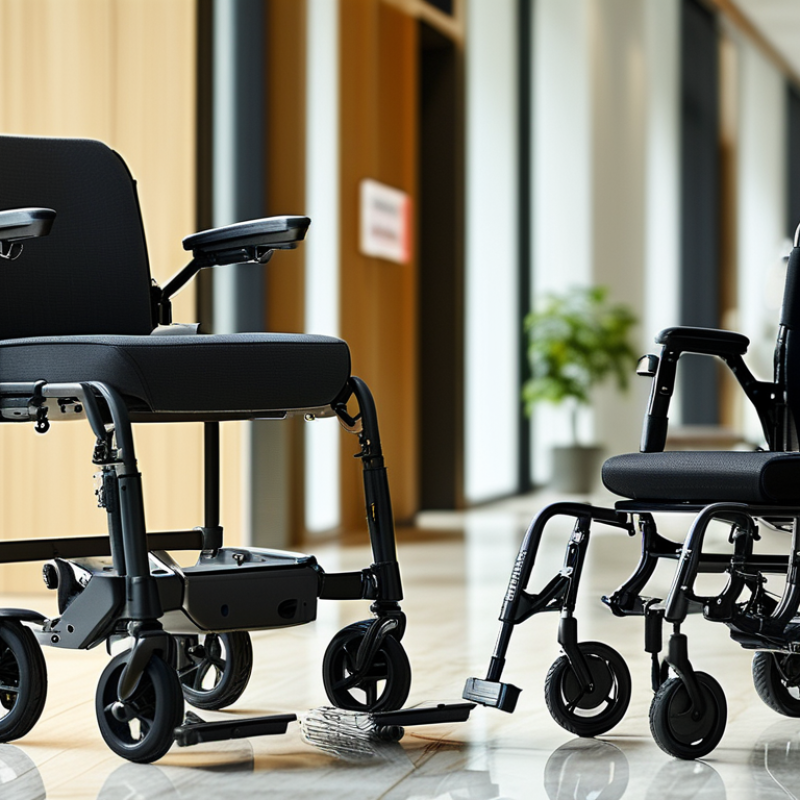
China Top Mobility Support Solutions: What Is the Difference?
In 2023, China had 296.97 million people aged 60 or above, according to official national statistics. This figure represents about one-fifth of the population. It also shows why mobility support must fit real daily routines, not only hospital needs. A walking cane may help someone with mild balance problems. A rollator can provide better stability during longer outdoor walks. Wheelchairs support users who cannot safely walk far, but they require suitable seating and reliable braking. Powered mobility devices offer more independence, yet they need charging space, route planning, and user training.
The best choice begins with a professional assessment. Doctors, physiotherapists, and occupational therapists can review strength, posture, vision, home layout, and fall risk. A narrow walker may work inside an apartment but fail on uneven pavement. A wheelchair with poor seat support can cause discomfort after only thirty minutes. Small details matter. Handgrip height, wheel size, turning space, and transfer safety should be checked in real conditions. Family members often focus on carrying weight, while older adults may value dignity and control more. That gap deserves attention. Data alone cannot describe every user’s experience. China’s aging population is large, but needs differ between cities, villages, homes, and public spaces. Better support combines tested equipment, clear instructions, regular maintenance, and patient feedback. Mistakes still happen when solutions are selected too quickly.
Mobility Support in China: 296.97 Million Older Adults in 2023
In 2023, China had 296.97 million people aged 60 and above, representing 21.1% of the population. People aged 65 and above totaled 216.76 million, or 15.4%. These figures indicate a broad need for mobility support, ranging from daily walking assistance and fall prevention to rehabilitation and long-term care.
Canes and crutches offer different kinds of lightweight support for limited balance and strength. A cane usually improves stability during short walks. It suits people who need one-sided support, especially on flat indoor floors. Crutches transfer more body weight away from one or both legs. They may help after injury, surgery, or significant weakness. However, poor fitting can increase wrist, shoulder, or underarm pressure. A physical therapist should check height, grip position, and walking technique.
The World Health Organization’s Global Report on Assistive Technology (2022) estimates that more than 2.5 billion people need assistive products worldwide. That number may reach 3.5 billion by 2050. The CDC also reports that more than one in four older adults falls each year in the United States. These figures show why simple mobility aids deserve careful assessment.
A cane is not a magic fix. It cannot correct severe balance loss or unsafe footwear. In practice, users should test the aid on stairs, doorways, and wet surfaces. These details expose problems quickly.
Walkers and rollators do not provide the same kind of stability. A four-leg walker offers a firm, stationary base. Its rubber tips grip the floor while the user advances one side at a time. This design suits people needing maximum support during standing and short transfers. It can feel slow on carpet or uneven pavement. That limitation matters.
A two-wheel walker reduces lifting effort. Its rear legs remain grounded, while front wheels move forward.
A rollator uses three or four wheels, hand brakes, and often a seat. It supports smoother movement and better maneuverability.
However, the frame keeps rolling unless the brakes engage properly. A user leaning heavily on the handles may lose balance during turns or sudden stops. More mobility can mean less passive stability.
The CDC reports that older adults cause more than three million emergency department visits annually through falls in the United States. The WHO also identifies falls as the second leading cause of unintentional injury deaths worldwide, with about 684,000 fatal falls each year.
These figures make device selection a safety decision, not just a comfort choice.
In practical assessments, clinicians should check grip strength, reaction speed, posture, flooring, and brake control. A four-leg walker is not automatically safer. A rollator is not automatically easier. I have seen users choose wheels for confidence, then struggle on slopes.
The better question is often overlooked: can the person stop, turn, and recover without help?
Manual and powered wheelchairs differ most in how movement begins. A manual chair depends on arm strength, posture, and assistance from another person. On smooth indoor flooring, skilled users may move efficiently for short trips. Ramps, gravel, and wet surfaces can quickly increase effort. A powered wheelchair uses a motor and controller, reducing physical strain during daily travel. Its usable range depends on battery condition, rider weight, slope, temperature, and terrain. Published range figures are useful, but real routes can be less forgiving.
Accessibility involves more than propulsion. A 4-centimeter threshold may stop a small front caster, while a powered model may handle it differently. Door width, turning space, desk height, and lift access also matter. Measure the narrowest doorway at home. Check the bathroom entrance, not only the hallway. Manual models are often easier to fold and transport, but lifting them into a vehicle can be demanding. Powered models offer steadier travel, yet their weight may limit storage and emergency movement.
A qualified therapist or mobility specialist should assess posture, transfer ability, vision, hand control, and daily routes. During a real trial, test the chair on the same slopes and surfaces used at home. Short trials can mislead. Battery capacity may decline over time, and control settings may require adjustment. I would not choose by range alone. A chair that travels far but cannot enter the bathroom is still a poor fit. Reliability also depends on tire pressure, battery care, charging access, and regular inspection.
China Top Mobility Support Solutions: What Is the Difference?
Smart mobility aids differ mainly in how well sensors, motors, and safety standards work together. Sensors may detect nearby walls, uneven floors, sudden drops, or changes in user posture. A short warning can prevent a serious fall. Yet sensors can misread dark carpets, glass doors, or crowded corridors. That limitation deserves attention.
Motors control movement, turning, climbing ability, and stopping distance. A well-tuned motor should respond smoothly when the user releases the control. Excessive torque may cause a sudden start, while weak torque can leave the user stranded on a slope. Battery monitoring also matters. Practical testing should examine heat, noise, emergency braking, and performance after repeated charging cycles.
GB/T standards help define technical requirements, testing methods, and product information in China. They can support more consistent checks for electrical safety, mechanical strength, labeling, and performance. However, compliance alone does not guarantee comfort or safe daily use. Fit, posture, training, and maintenance still influence outcomes. A device may pass laboratory tests yet feel difficult in a narrow apartment. Real environments remain unpredictable. Careful trials, documented inspections, and honest risk warnings make mobility support more dependable.
| Mobility solution | Primary user need | Motor and drive system | Typical sensors or safety features | Common operating environment | Relevant GB/T standards or test areas | Main safety consideration |
|---|---|---|---|---|---|---|
| Manual wheelchair | Users who need seated mobility and can self-propel or be assisted by a caregiver. | No motor; propulsion is provided by the user or an attendant through hand rims or push handles. | Parking brakes, anti-tippers, wheel locks, reflective elements, and optional posture-support components. Electronic sensing is normally not required. | Indoor areas, paved paths, hospitals, homes, and accessible public facilities. | GB/T 13800 covers manual wheelchairs; the GB/T 18029 series addresses wheelchair performance tests such as stability, braking, dimensions, and durability. | Brake engagement, rearward stability, occupant posture, and safe handling on ramps or uneven surfaces. |
| Powered wheelchair | Users with limited upper-body strength or endurance who require independent seated mobility. | Battery-powered electric motors drive one or more wheels through a controller and joystick or other input device. | Electromagnetic braking, speed control, battery monitoring, motor-current protection, obstacle sensors, tilt detection, and anti-tip wheels may be used. | Indoor and outdoor accessible routes; capability depends on wheel size, ground clearance, torque, and controller settings. | GB/T 12996 applies to electric wheelchairs; GB/T 18029 test areas include stability, braking, obstacle negotiation, strength, and electrical or mechanical safety. | Unexpected acceleration, loss of braking, battery faults, electromagnetic interference, and tipping on slopes. |
| Mobility scooter | Users who can sit upright and operate a tiller but need powered travel over longer distances. | Battery-powered motor and transaxle system; front-wheel, rear-wheel, or central drive layouts are used. | Throttle release control, electromagnetic braking, speed reduction during turns, battery state monitoring, lighting, reflectors, and optional reverse or obstacle alerts. | Shopping areas, residential roads, paved sidewalks where permitted, and other accessible outdoor routes. | Applicable requirements should be checked against the product category and current GB/T or regulatory requirements; wheelchair-related GB/T 18029 tests may not cover every scooter feature. | Turning stability, visibility to pedestrians and vehicles, braking distance, and compliance with local traffic or sidewalk rules. |
| Powered rollator | Users who can walk but need balance support, controlled assistance, or reduced walking effort. | Small hub or geared motors may provide braking assistance, propulsion support, or controlled resistance. | Handle sensors, wheel-speed sensors, incline detection, automatic braking, handle-release detection, and battery or motor diagnostics may be included. | Indoor corridors, care facilities, shopping areas, and smooth outdoor pavements. | The product should be assessed under the applicable walking-aid, electrical-safety, battery, and EMC requirements; wheelchair standards should not be assumed to apply automatically. | The device must not drive unexpectedly or roll away when the user releases the handles. |
| Standard rollator | Users needing balance support and a lightweight walking aid without powered assistance. | No motor; the user controls movement through walking force and hand-operated brakes. | Mechanical parking brakes, hand brakes, height adjustment, non-slip grips, seat locking, and reflective details. Electronic sensors are generally absent. | Flat indoor floors and smooth, firm outdoor surfaces. | Relevant walking-aid requirements typically address strength, stability, brakes, dimensions, adjustability, and durability; the exact standard depends on the product classification. | Correct brake adjustment, stable wheel contact, suitable handle height, and avoidance of steep or slippery surfaces. |
| Stair-climbing mobility device | Users who need assistance moving a seated person across stairs where a ramp or lift is unavailable. | Electric geared motors, track systems, or mechanically controlled climbing modules; some models require an attendant. | Inclination sensors, step-edge detection, load monitoring, emergency stop, controlled descent, seat restraints, and battery protection are critical. | Staircases with suitable dimensions and surface conditions; operation normally requires trained supervision. | A dedicated conformity assessment should cover machinery, electrical safety, battery, EMC, restraint, stability, and risk-control requirements; wheelchair GB/T standards alone are insufficient. | Load security, controlled stopping, anti-rollback performance, stair geometry, and operator training. |
| Smart navigation wheelchair | Users who need powered wheelchair mobility with assistance in route guidance or obstacle awareness. | Electric drive motors controlled by a joystick, touchscreen, voice interface, or assisted-navigation computer. | Ultrasonic, infrared, camera, LiDAR, wheel-encoder, inertial, and proximity sensors may support obstacle detection and path planning. Sensors assist but do not replace user supervision. | Structured indoor environments and selected outdoor routes with adequate lighting, clear passages, and reliable sensor coverage. | The base wheelchair should meet applicable GB/T 12996 and GB/T 18029 requirements; navigation functions require additional software, functional-safety, cybersecurity, privacy, and human-factors evaluation. | Sensor blind spots, false detection, software failure, loss of localization, and safe transition to manual control. |
: About 296.97 million people were aged 60 or above. That is roughly one-fifth of the population.
A walking cane may help with mild balance issues. Proper height adjustment remains important.
A rollator offers greater stability during longer outdoor walks. It may feel awkward in narrow rooms.
A wheelchair may help users who cannot safely walk far. Seat support and reliable brakes are essential.
Manual chairs depend on arm strength or assistance. Powered chairs reduce physical effort through a motor and controller.
Not necessarily. Range changes with battery condition, rider weight, slopes, temperature, and terrain.
Measure the narrowest doorway, bathroom entrance, turning space, and lift access. Hallway width alone can mislead.
A device may work indoors but fail on gravel, ramps, or wet pavement. Test familiar routes when possible.
Sensors may detect walls, drops, or uneven floors. Motors can support smoother turning, climbing, and stopping.
No. GB/T standards support testing and product information, but comfort, training, posture, and maintenance still matter.
China’s growing older population, reaching 296.97 million people in 2023, has increased the need for reliable mobility support solutions. The main options include canes and crutches, which offer lightweight assistance for users with limited balance or strength; walkers and rollators, which provide greater stability through four-leg or wheeled designs; and manual or powered wheelchairs, which differ in propulsion methods, travel range, and accessibility requirements. Understanding what is the difference between various mobility support solutions helps users and caregivers choose equipment that matches individual ability, environment, and daily routines.
Smart mobility aids add further support through sensors, motors, alerts, and assisted-control functions. Their safety and suitability depend not only on technical features but also on correct adjustment, user training, maintenance, and compliance with applicable GB/T standards. By comparing stability, portability, maneuverability, power assistance, and accessibility, families and care providers can make more informed decisions for safe and comfortable movement.

Merlix Chair