Mobility assistance technology is moving beyond the idea of a single device solving every challenge. Powered wheelchairs now pair adjustable controls with sensors that help users navigate crowded corridors. Smart canes can provide vibration alerts, while wearable systems and robotic exoskeletons are being developed to support specific movement tasks. So, what are the latest trends in mobility assistance technology? The most meaningful changes combine personalization, connected features, and better fit with everyday environments.
Rehabilitation engineer Dr. Rory A. Cooper has long focused on improving mobility through engineering and user-centered research. His work underscores a practical principle: devices should be designed around people’s needs, not merely technical capability. That distinction matters. A chair that turns smoothly in a clinic may still struggle on a narrow kitchen floor. App-based controls, adaptive seating, and navigation aids can help, but only when they suit the user’s abilities and routines.
The picture is not perfect. Cost, device weight, battery life, repair access, and privacy can limit real-world benefits. Newer does not always mean better. This article explores emerging designs and the evidence behind them, while asking a grounded question: does each innovation make daily movement safer, easier, or more independent?
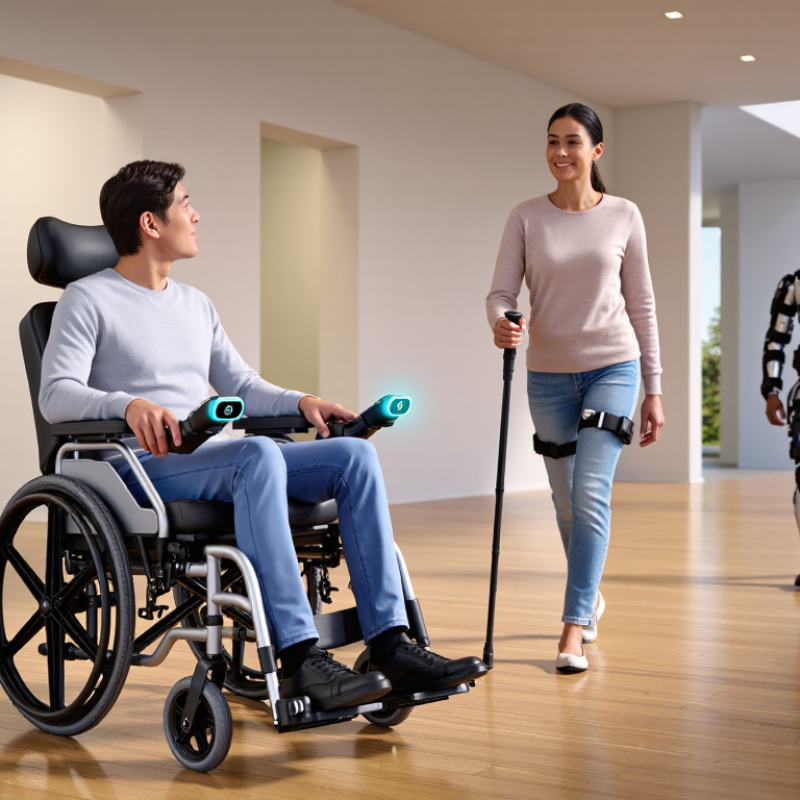
Modern mobility assistance devices range from simple canes to powered wheelchairs, and each supports a different level of movement. Canes can steady someone on a short walk, while crutches shift more weight away from an injured leg. Walkers provide a broad frame for balance; rollators add wheels, brakes, and often a seat for pauses. Fit matters. Handles should sit near wrist height when arms rest naturally, though a clinician can check posture and gait. Poor fit may strain shoulders or make turns less secure.
Manual wheelchairs rely on upper-body effort or a helper, whereas powered chairs use controls for longer or more demanding trips. Mobility scooters suit some outdoor journeys, but turning space, uneven pavement, and safe transfers still matter.
Stair lifts and platform lifts address barriers at home or building entrances; they do not replace walking aids. Some newer devices include obstacle alerts or activity tracking, yet sensors cannot judge every curb, crowd, or slippery patch. Not every feature helps. Before choosing, consider daily routes, storage, hand strength, fatigue, and maintenance support. A rehabilitation professional can help match a device to its user. Real-world trials may still reveal annoyances nobody anticipated.
Canes offer support on short walks. Crutches shift weight away from an injured leg. Walkers provide a wider frame, while rollators add wheels, brakes, and often a seat.
Handles should sit near wrist height when the arms rest naturally. A rehabilitation professional can check posture and walking style. A poor fit may strain shoulders.
Think about daily routes, storage space, hand strength, fatigue, and maintenance. Try the device in real settings when possible. Small annoyances can matter.
Manual chairs need upper-body effort or help from another person. Powered chairs use controls and may suit longer or more demanding trips.
Not always. Turning space, uneven pavement, and safe transfers matter. Check the route, not just the scooter.
Sensors may detect nearby obstacles, but they can miss low objects or behave unpredictably in crowds. They support judgment; they do not replace it.
In some rehabilitation settings, they help people practice standing or supported steps with trained staff nearby. Results vary, and the equipment can feel tiring.
Assessment and fitting are essential. A device that feels helpful in a clinic may feel quite different at home. That gap deserves more attention.
Easier transfers, natural-feeling controls, and fewer charging interruptions can improve daily routines. Repairs, training, and access remain uneven. Technology still has awkward moments.
Mobility assistance technology is evolving to offer greater independence, comfort, and safety for people with different movement needs. Modern options include manual and powered wheelchairs, mobility scooters, walkers, smart canes, and wearable exoskeletons. Many devices now feature adjustable controls, connectivity, navigation support, and customizable settings that help users adapt them to daily routines and surroundings.
When considering what are the latest trends in mobility assistance technology, key developments include lighter powered wheelchairs, more responsive exoskeletons, and sensors that help detect obstacles or changes in balance. Artificial intelligence can support safer movement by interpreting sensor information and providing timely guidance, while connected features may help users monitor device performance. Choosing a suitable option involves considering mobility goals, comfort, environment, and accessibility. Guidance from qualified professionals and information about available support can help users identify technology that fits their needs.

 Merlix Chair